I felt the stares of the people I was with at the bar.
“I just haven’t seen anyone order Budweiser in ages. Or maybe ever.”
Said the friend who has returned to being a stranger to me again.
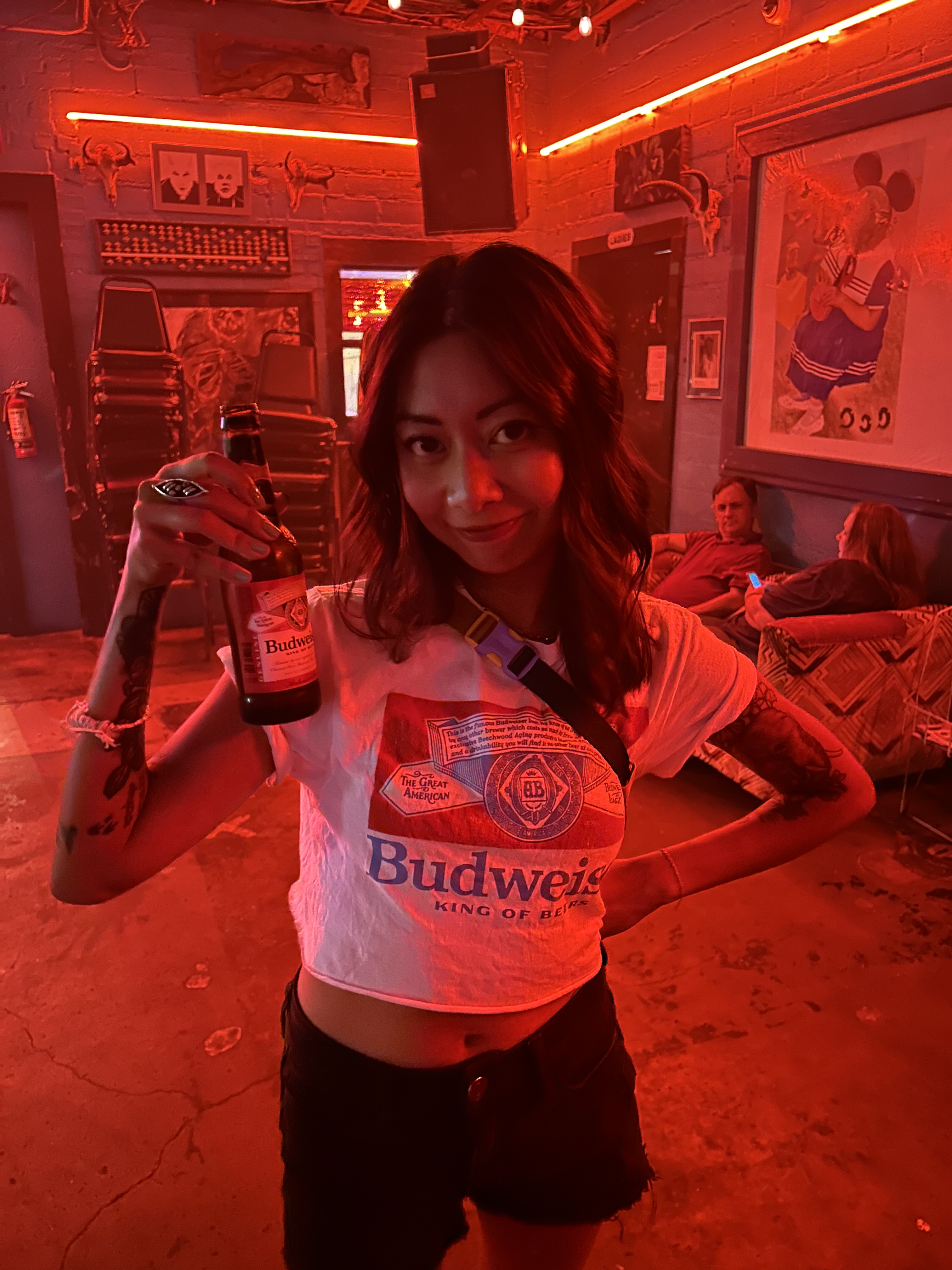
“I thought this classic beer would do for tonight.”
I didn’t need to tell him he didn’t have to know that when I drink Budweiser I see a photograph of a stone, park table a few cans of Budweiser vintage now the sun, high, illuminating healthy, old trees in the foreground my father in a white tee and denim button down grinning happy his arm slung around his best friend
I didn’t need to tell him he didn’t have to know that when I drink Budweiser I feel the brisk evening air coming off the lake as I watch Grampy at his 70th birthday party in his chair at the table on the patio with Nana nearby remembering their ritual of cracking open their first evening beer together and toasting to each other before taking a sip
“I will never be like him,” she laughs, as he recalls a childhood memory of his, the time he almost swallowed and choked on a whole baby mango because he didn’t want to share it with his siblings. He seems energetic and happy at the wobbly dinner table, surrounded by mismatched chairs. When he’s done eating, he leaves the table abruptly to smoke a cigarette outside and commands the family to clean up. She sweeps the floors, the easiest task for the youngest. Her brother puts away the leftover tum makhoong that Pa had made and the rest of the khao niew, still half full in the woven rice baskets.
“I will never be like him,” she ponders admiringly, as he builds a shed in the corner of the backyard to store gathered scrap wood, tools, and spare knick knacks that the house can’t hold. “Jao het heuan hai mah, boh? Are you building this house for our dogs?” she asks innocently, 6 years old, hoping that that’s the case. He doesn’t respond. “I guess he thinks that’s a dumb question,” she thinks, as she walks away to play in the herb garden that he’d grown, searching for snails to bother.
“I will never be like him,” she mopes, as she watches him sitting stone silent, staring at the rain pounding against the truck windows, immobile, stuck, hungry, as she waits to gather her school things and to go inside the house. “Pa,” she murmurs. It had been a long day for a second grader. He makes her wait in the truck with him until the rain subsides. They don’t speak.
“I will never be like him,” she tells herself, over and over, tears streaming heavily and quickly down her face as she watches her mother put the household back together after another of her father’s rage episodes. She helps take the belongings that aren’t broken out of the trash and takes them to the kitchen sink. Her mother moves just as slowly and deliberately as he had moved so rapidly and destructively. She hears him crack open a Budweiser in the next room over.
“I will never be like him,” she screams internally, watching, helpless, as yet again, another of her siblings takes a whipping for his irrational “reasons.” This time, she throws herself across her sister’s back in the hopes that he won’t strike his smallest, youngest child. She is wrong.
“I will never be like him,” she walks away reluctantly but still without hugging him goodbye, as he remains seated in the living room of his care facility. He wears a scarf around his neck, gifted to him by her loving brother, taken off of his own neck just moments before. Pa said he was often too cold inside the building. She vows to return, to interview him and ask him the questions he has promised to answer, to write his story, the family’s story, but she never gets the chance. “Bye, Pa.”
“I will never be like him,” she declares, out of the corner of her mouth, lighting a cigarette, drinking a Budweiser, sitting on the tailgate of her truck. She waits.
It was easy to spot him in a sea of people. He was wearing a black cowboy hat and boots, having fallen in love with Texas fashion upon arriving from Laos in ‘89. I thought he looked a little silly but loved him for it, even as a teenager who deeply cared about appearances. Pa walked up to me with flowers in hand, grinning from ear to ear. The lilies were a little expensive, but they reminded us both of plumeria, in fragrance at least, which grew abundantly in his hometown in Laos. He presented them to me and then pulled me into a hug. I could tell that he was radiating pride for his youngest daughter graduating from high school, and, at that moment, I was proud to be his daughter too.
My high school was quite small – a graduating class of 58. It was tradition that the graduation ceremony was held at a historic church in downtown Dallas. The stained glass windows cast warm shades of red and yellow along the hall where families were gathering. It was the perfect golden hour on a Friday evening: laughter, chatter, and hugs all around. Young adults on the verge of the next big step of their lives. This moment in time was a milestone for both of us. Pa was a man of few words, but he really didn’t have to say much. We understood each other.
—
This time, there were more people. I graduated with an Integrative Studies degree from the University of North Texas, and the ceremony was in the coliseum, and the crowds were dense after the graduates were all released to find their loved ones. Flowers in hand, again, Pa was waiting by the steps, a strategic place for me to find him. Smart, I thought. I wondered if always finding a good lookout point was an instinct leftover from having fought in the Secret War. He was a clever, resourceful man, always creating.
It was a warm day in May and the sun was high. I couldn’t wait to eat at the Thai restaurant in town that had the savory and funky flavors in their dishes that were closest and most pleasing to our Lao palates. I was impatient when I was hungry, much like Pa. We waited for the rest of the family to find us. This graduation was enough for me; I opted not to attend the ceremonies for my master’s degrees. Achieving an undergraduate degree was the highest education anyone in my family had earned at that point, and I knew, again, the amount of pride my father held for me then.
—
And then Pa was tying white threads around my wrist at my wedding reception. I shed a tear as he wished for my health and prosperity in Lao. He said that Mae had been up so early that morning, preparing the threads, the boiled eggs, and the steamed rice desserts for the ceremony. Pa had a tenderness in his eyes when he spoke of her.. He complimented the blending of Lao and Texan traditions, grinning at the cowboy hats that several of the wedding party had donned on their way in. He loved my partner as his newest, youngest son.
We whispered inside jokes and teased one another on the dance floor, relishing in a moment together and chuckling to get through our nerves. He twirled me a few times to an old country song, but we’d established during the wedding planning that he was too shy to dance for a whole song. So off we went to raucous applause at the end of our very short father-daughter dance. It was bliss.
—
Across the pha khao from me, Pa is cradling a Budweiser can in his left hand as he eats khao poon with chopsticks in his right. I’m annoyed at the slurping noises of approval at my cooking but also so happy to see him enjoying the food I prepared. It’s our favorite Lao meal: red curry and coconut milk soup with somen noodles, spicy, just a hit of sour, fresh, and so texturally fun to eat. “Saap e-lee,” he tells me, grinning and nodding. “Thanks, Pa,” I respond, laughing as he abandons his beer to lift his bowl and drink every last drop of soup.
—
If only these scenes were real memories. If only Pa were still alive. I would tell him how much it would have meant to me to have tried to heal our relationship, so that I could share with him about those milestone life events from which he was absent (I wasn’t ready to invite him). Though I’ve imagined these scenes from the perspective of “wishing my father had been the kind of loving, caring, delightful, compassionate father that everyone deserves,” I am also writing it from the perspective of “this is who I wish I had been too.” We are both not without our flaws.
I would apologize for subconsciously punishing him by avoiding and excluding him, and that my anger at his mistreatment of me, of his own family, felt justified. So I never called. I never considered inviting him. In my distance and protecting my peace and happiness, I was safe. It turns out, I was still afraid of him, despite his aged and frail body, he was still the monster my younger self saw. Feeling righteous and powerful, I was adamant that my abuser would not be allowed in my presence. Power can delude you, too.
And trauma can cause you to make decisions you might deeply regret with perspective but it is part of the healing process and cannot be discounted. You have to be gentle for treating people how they time and time again proved that they needed to be treated to protect yourself. For making choices that you wish you could change (but would you?). I don’t remember the last time that I hugged my father. (But why would you hug your abuser?) It goes on.
Grief has twisted its tendrils around every bit of me, sometimes binding me so tightly, I am incapacitated.
Perhaps, reader, you have gathered that I did not invite him to either graduation, nor to my wedding. We also never shared moments like eating a meal that I had made together, and it pains me that he never got to try (and criticize but maybe lovingly) the Lao food that I make these days with pride.
My father had crippling PTSD that went untreated, and his actions my entire life necessitated distance from him. I thought I might be able to log an interview or two with him after some years of my own personal work in therapy, but COVID took him from this plane of existence and that was that. I thought I had time, and that is a misconception that we all make and must forgive ourselves for. I am here, fatherless, and without ever having the chance to invite him to any other milestone events again, even if I chose. Even if it were a possibility. And I live with this. It doesn’t get easier; but we get stronger.
February 11th marks one year of my father’s passing, and a little under one year since I’ve published a blog post. I would love to say that this was intentional, but it wasn’t. I was just dealing with a lot of shit and spending too much time away from what feeds my soul (more on that in another post that’s been fermenting).
I love the momentum of a “new year” whether it’s literally a new year or a turn around the sun (birthdays) which is why I mark significant dates as anniversaries during which we are “starting anew.”
February 11th marks one year of my father’s passing, and a little under one year since I’ve published a blog post. I would love to say that this was intentional, but it wasn’t. I was just dealing with a lot of shit and spending too much time away from what feeds my soul (more on that in another post that’s been fermenting).
When you lose someone as significant to your life as a parent, you’re transformed. This is something I found myself declaring in the early days to my therapist and anyone who would listen post-father loss. I felt a seismic shift within myself but didn’t know what that would look like. But there are some earth shattering experiences that you can’t go through without unlocking a part of yourself that needed to be let loose at some point so you can become your whole self.
So here’s my year-in-grief-review, picking moments that stood out to me and felt connected to my father-loss.
I told a friend that I felt like I could “kick doors down” and that I “wasn’t afraid of anything!” and I think it was the adrenaline from the shock of my dad’s death speaking at the time. But little things started taking shape and manifesting.
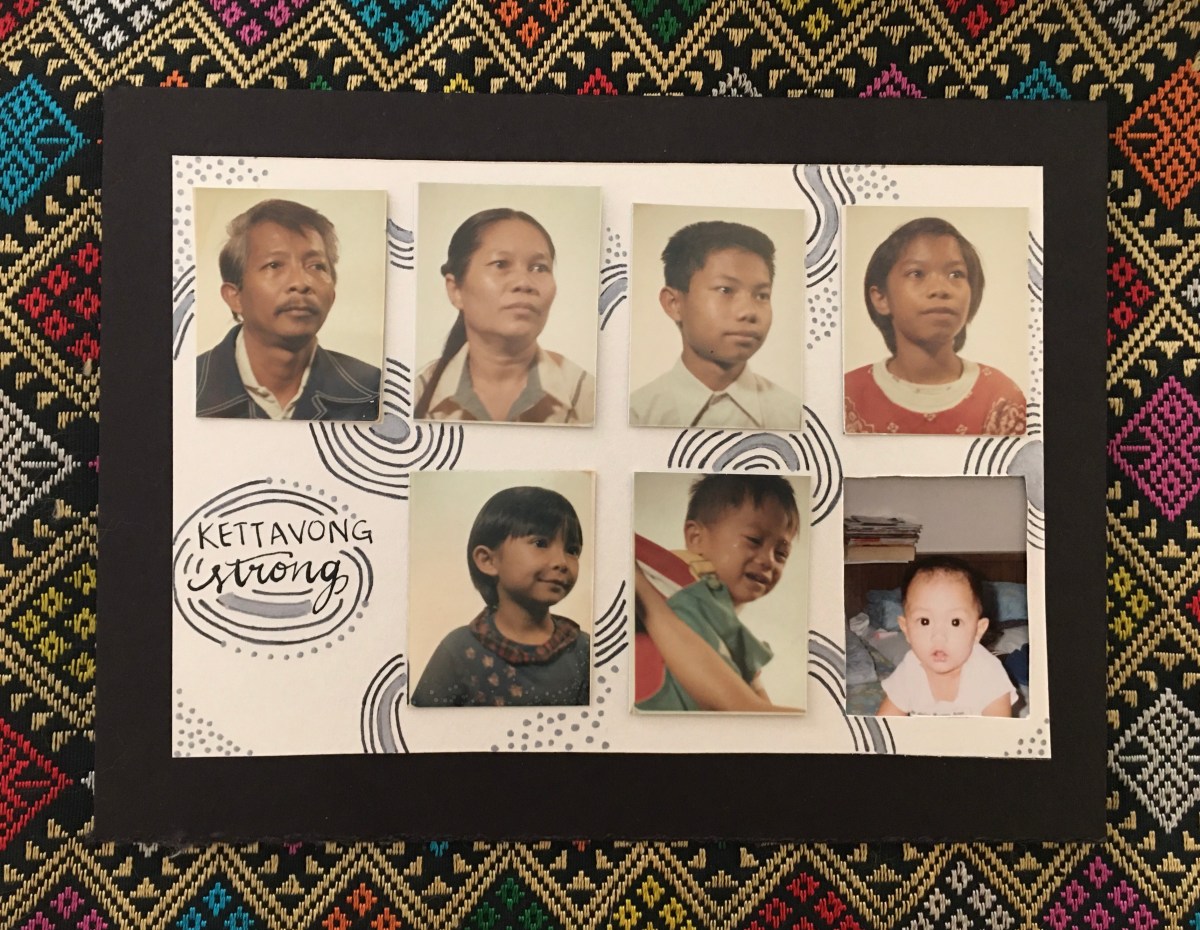
In the wake of anti-Asian sentiment and hate crimes, I took my very Asian name back o f f i c i a l l y, the one given to me by my parents: Lasamee Kettavong.
I embodied the “kick doors down” power and somehow no longer gave a fuck whether someone liked me or not. I began to let all of my colors show, wherever I went and with whomever I spoke. Life is short and the unexpected will happen (which you CAN expect, ha. ha.).
I’ve thought about what my epitaph would be and what my tombstone would look like since the time I learned what an epitaph was (probably in high school english class). My tombstone sure as hell will NOT read “Laci” because that’s not who I am. My name means something synonymous with “celestial light” and I can’t live with myself avoiding embodying that brilliance that my mother gave me, so here I am, nice and shiny (read: oily, lol) for ya.
Throwing myself into learning more about the motherland and connecting with other Lao folx has helped me feel like part of a community and that I belong and am accepted. That’s mind-blowingly heartwarming for me. For some reason, my dad didn’t really help the family become a part of the Lao community when we were younger, and that’s a shame; my mom is a social creature and extrovert.
Blake and I finally got married this past year, which we were planning on doing anyway, but … now I actually had an easy reason to tell people why my dad wasn’t present. Before, it was “My father has complex PTSD and can’t be around people” with a big, fat, loaded silence following it. “He’s dead,” is a much easier to digest and say reason, plus, no one wants to upset the bride the day of the wedding and bring up dead dad, right? (Sorry, this is my sense of humor and how I talk … dark and maybe a little blasphemous?) My sweet mama walked me down the aisle.
Me, trying not to let fat tears roll down my face during a moment of silence for the people who couldn’t be with us on our wedding day
As the day of the dead/Dia de los Muertos rolled around, I’d planned to read a letter to my dad at an open mic but ultimately that didn’t happen. It’s okay though – I wrote one to him anyway, and now it exists in the world and has helped me do some healing. My therapist was excited for me to take this major step (publicly announcing my father), but that will have to wait.
What else did I accomplish? Finishing a podcast, The Untitled Dad Project, which for me is monumental. I’ve only finished listening to one audio book in my lifetime because I can’t stay focused on longer audio pieces.
And last but not least, my partner and I started our small business, Good and Golden, which aims to share Lao food and culture (lookin’ for partners here!) with people who don’t know what or where Laos is!
And, I learned a little more about what forgiveness looks like for me.
I hope that he didn’t suffer
January 20, 2019 was the last day that I saw my father in-person at his care facility. My brother and sister went with me. We’d had brunch and mimosas. We pulled in, parked, and my brother and I shared a cigarette, while my sister climbed a nearby crepe myrtle. She gets her anxious energy out in weird ways; my brother and I have our own coping methods.
Samout, climbing a tree and being silly before seeing our dad for the first time in years
I noted the automatic sliding door, the decorated entryway, the fake plants, the office-like feel to the environment, and the front desk person greeted us, asking what we needed and who we were there to see. I was in family historian mode. “Nai Kettavong,” we said, as she searched up where he might be and on what floor. We got on an elevator.
“Oh no one ever visits Nai,” the staff person on the second floor responded. I cringed. The place didn’t feel real. It felt like a dream where you know that you’re asleep and intuitively, you know where you are and feel like you’ve been there before. This was the first time I’d ever stepped foot in this facility.
We were lead to my father’s room, and it was empty. I panicked a little inside.
“He might be watching TV in the common room,” our guide said, and we followed him, completely silent.
There he was. My dad. The man who I had feared for most of my life and felt some dutiful love towards as his daughter. He was alone. There were chairs here and there in the room and a lonely couch, a couple of small cafe-sized tables along the wall. At least there was a window, wall to wall, behind him. We pulled up a couple chairs to the round table that he was seated at, a walker nearby.
Playing on the television was some mundane show about wildlife or something that I didn’t particularly care about but was glad there was something for all of us to look at when we needed to look away from one another.
He looked so much grayer, pale, and older than I remembered. He had the same smile though, somewhat sheepish and shy. Perhaps he felt as if he were dreaming too. His children were actually there to see him. Chasms of guilt rippled through me.
“Do you remember me?” my sister asked.
“Yes,” he replied calmly.
I’d suspected that the language barrier between my father and staff contributed to my father’s diagnosis of early dementia. I would observe a little more closely, I thought to myself.
“How are you?” my brother asked. “I’m fine here. I get a little cold,” he responded.
Later, my brother would take the scarf that he was wearing and give it my dad because of the comment about being cold, which I’d notice in all of his photos in the years following. Our oldest sister would become his caretaker in Texas City, where he would be moved to in just a few months following this visit.
The conversation was slow. The three of us assessed the situation, asking questions here and there. Speaking Lao out loud to our estranged father was quite the task. And we were electrified by being in his presence again, I think.
I asked him if I could ask him some questions for a project that I was working on, and he said, “Go ahead, ask, and I’ll tell you everything.” That was the last time we spoke. I didn’t get to ask him any questions again.
Gray is how I feel when I think about this. Like hand torn paper pieces that have been mixed with water to become pulp and and then pressed, to live a different life. Lumps. Speckles. Wet. Shapeless until the next step. Amorphous and gray. Lacking any brightness, any warmth.
Recently, I realized that a confident sign that you have forgiven someone who abused and terrorized you and your family (even if it was their own family) is that you pray that they did not suffer during their last days. That hot, boiling rage that you used to feel when you cursed them into oblivion turns into just your body temperature as you sigh and think about them.
The ‘rona finally got me after two years of the pandemic, and it was days of body aches, fever dreams, sinus pressure, sneezing, coughing, and mucus. The first night, I rolled over and said to Blake, “I hope my dad didn’t suffer,” and tried to get a good cry out. It didn’t work. I finally cried typing “He was alone,” in the above paragraph.
It took another couple of days for me to think to myself, “Ah. Yes. I did the work. I have forgiven.”
My father died of COVID complications last year, and we still have not been able to take his ashes to his final resting place. For Lao folks, this is usually the temple in the community. I know that this is the case for too many at this point in the pandemic. I am so sorry.
It’s been nearly an entire year since I’ve published anything on this blog, and it somewhat symbolizes where I’ve been with my grief: in the in-between. Which, I suppose, is where we could say my father’s physical being is too.
If you are in the in-between, I will meet you where you are. If you need help, please let yourself shoot that text, make a call, send an email, or call an anonymous hotline. It’s worth it; you’re worth it.
I’ve made this spicy, funky, sour, mortar-ed and pestle-ed shredded, green papaya salad (thum makhoong) dozens of times. Sometimes if the Thai chilies and garlic that I’m crushing pops out of the mortar and gets into my eyes, I’ll cry.
This time, I’m crying because I’m remembering how my dad used to make thum makhoong for family meals: very sour, not too sweet, little bit of funk from the padaek (fermented fish sauce) and extremely spicy. Lao people eat thum something (papaya, cucumber, carrots, so on) with nearly every meal.
“Am I going to do this every time?” I ask my partner, as he gives my arm a squeeze, and I scrub at my face. It was day nine post-my father’s passing, and we were managing to stay warm and survive during the worst winter storm of my life, exacerbated by Texas’ energy grid failings (but that’s another story), and I have been moving through the days in a blur. I had consistently been able to cry while listening to “Live Forever” by Billy Joe Shaver to avoid emotional constipation. For whatever reason, the lyrics “I’m going to live forever, I’m going to cross that river” magically floated to the front of my mind on the day of his death. But other moments lately, I’m quite unsure what will bring tears to my eyes.
Mostly memories make my eyes sting but the pain is moving more toward thinking about what could have been and never was. What can now only be dreamed.
On hot summer days, when pa would water the herb and plant garden in the backyard, fragrant with spearmint and Thai basil, vibrant with giant green gourds and adorably wrinkly looking bitter melon, I’d play in the shower of the garden hose water, always hoping the sun would gift us a rainbow.
When pa smoked a cigarette after dinner, I’d bat at the plumes of smoke that he exhaled. Summer nights outside feeding june bugs to the chickens and feeling the sticky heat of the day slowly leaving.
I am comforted by the scents of mint and tobacco to this day.
I used to run into my father’s arms after pre-k and kindergarten classes. How I hated to be away from home in a foreign place those days, away from my caretaker and the family pets, and the creature comforts that a 5 year-old has, no matter how sparse they were.
Pa had a temper, but he also had tenderness for growing, living beings.
I questioned him here and there, perhaps foolishly, but when you’re young, you’re naive.
“Why do you get to watch your Lao comedy shows, but you don’t let mom watch her Thai soap operas?”
Crickets.
“Why won’t you let me participate in academic clubs and sports?”
“Why can’t we visit our friends’ houses?”
The concerns of a little girl, of course.
I never got to ask him certain questions that I was sure would help us repair our relationship, someday.
“Why won’t you tell your sons and daughters that you’re proud of them?”
“Do you love us?”
“What happened in the war?”
“Where were you born?”
“What was your relationship with your parents like?”
“Do you feel any remorse for what you did to your own flesh and blood? The woman you married?”
“What happened during the interrogation by the Thai police?”
“Would you ever want to visit Laos?”
“What do you miss about Laos?”
“What’s your favorite meal?”
The Saturday before my dad’s death, my siblings and I had a Zoom call for the first time, ever. We don’t talk much but do try to stay in touch and check in every now and then. We have a group chat but somehow managed to avoid Zoom even during the pandemic that burns slowly on.
The last time we had a call with all five of us was when my mother had a minor stroke in November 2016. Our parents somehow always bring us together even if one of them (my father) tried to drive us apart.
We arranged this Zoom call because our father had COVID. He was in a care facility in Texas City where my oldest sister lives.
He’s “okay but not great” is what the woman on the phone told me when I called to check on him. She hesitated. I felt the silence.
I asked if we could arrange a time to FaceTime.
She told me that would be “hit or miss.”
That it’s her and one other person taking care of the COVID unit. Her and Laura.
I asked for her name. Nicole.
Said “Thank you. Take care.”
Hung up.
Hours later, my sister told the family “Dad just passed away!” Time slowed down and sped up. Chaos ensued. Calls missed, FaceTimes urgently popping up, having to tell mom. Having to figure out how to breathe. Having to persevere. Having to hurt. Grieve.
Everything feels fragmented and disjointed when I try to think about the reality of what is happening right now. Like I don’t know how to use words and form sentences properly. Like I have brain fog, but I’m not the one infected.
Have I done all that I could? Probably not.
Would it be enough for me even if I did? Never.
Many things have come of this upheaval of life.
For one, I trust my cards, and I trust my intuition. The two times that I have felt a deep calling from the universe the way that I have regarding my mother’s health and my father’s death will remain distinct, incomparable, and telling.
This sense of urgency and inexplicable connection to them, to the universe, to some web of our collective unconscious, that struck me as “something profound is happening” comforts me, even if historically it has been a harbinger of bad news. In the future, should this sense overtake me again, I will know that I need to act.
I have to believe in the power of this sense and its source. Or else I can’t believe that my father knows that I forgive him, can hear me tell him that I love him, and I’m sorry. And that he loves me still, too.
My siblings and I have talked more than we ever have in the past few weeks, the five of us, as far as I can remember. We’ve shared emotions and tears that we never did when our father was alive. This has to mean something too. Thanks dad.
Below is a personal history statement that I submitted for something that I really wanted, but I know that I’ll look back one day with perspective and not feel so disappointed. It’s important to talk about rejection (and accept it) just as much as it’s important to shoot your shot.
—
Going to college seemed impossible and out of reach for me from a young age, especially after watching one of my older sisters denied the opportunity despite being valedictorian of her class. My father prohibited her leaving home for school, set in his old world and oppressive ways.
We are a Lao family, and I am a Lao-American woman, meaning that in a traditional Lao household, I would have very little choice, no voice, and expectations to be married off. Because I was the youngest of five children, having been born a few years after my family’s arrival in the United States from a refugee camp in Thailand, I was fed, clothed, and had a place to sleep. But nurtured I was not. We survived, and it would be well into my adult years away from home before I could consider myself healthy and have the potential to thrive.
My mother worked achingly hard to support our family of seven, and my father stayed home to take care of my siblings and me. He did not adjust well to life in America. I would say that the PTSD and other untreated mental illnesses also hindered him. “My father has horrific PTSD and cannot be around people,” is something my therapist suggested that I say when I do not want to elaborate upon the horrors that he inflicted upon my family in various settings. He has been out of my life in any meaningful way since I was 15.
My father fought in The Secret War in Laos, which continues to affect the country (and my family) to this day. This topic leads me to the challenges that I have worked to overcome with years in therapy, personal research, joining the Lao community later in life, and trying to shed light on subjects like The Secret War, intergenerational trauma, mental health, low literacy rates for Lao-Americans, and more. In recent years, I began volunteering with DFW Lao Heritage, a non-profit group that aims to preserve and highlight Lao culture in North Texas. More recently, I’ve participated in the supportive, community offerings of the Laotian American National Alliance (LANA).
Being between worlds is a strange existence. Not one or the other, but both Lao and American. I have struggled with what this means and hope that I can move closer to the answers in a program of academic study. I was noticed as an intelligent, bright child despite feeling invisible and in some ways unwanted and unwelcome. My secondary education and onward was in magnet schools for the academically gifted in Dallas, Texas. Through the generosity and care of my teachers, I began to believe that I could move myself and perhaps my family upward from our places in life.
Education seemed to be key; I would study, work hard, find a career path, and live out our Lao American dream, in theory. The road is still rough, but we are farther on our journey and closer to security than we were when I was a child.
However, none of my older siblings had been able to “go off” to college (at least until my father was out of the picture). Attending college seemed financially impossible which nearly stopped me from even considering applying. In high school, I was fortunate enough to receive guidance from a school friend’s aunts: they took us both on a college tour in California and afterward sent me a $300 check so that I could pay for application fees. It was encouragement that I’m sure my own mother would have offered me if she had the experience, resources, and capacity to do so.
I received the Emerald Eagle Scholarship, which benefits those in financial need, from the University of North Texas as part of my offer letter and acceptance package and that paid for much of my undergraduate studies. I graduated in three years, having earned credit for my core classes through Advanced Placement exams in high school. I discovered that I could indulge in learning about my heritage and family’s history while also writing academically in my last undergraduate semester with the help of a philosophy instructor whom I’d admired. I wrote about the Mekong River, partially to learn about what my parents and siblings had had to face to get to safety and also because the term paper requirements were that I write about a topic from the course, philosophy of water.
I had made a connection between my personal and academic life that would continue in my graduate studies: bridging my two worlds through study in disciplines directly related to my family’s history and that of other Lao people and refugees. I studied philosophy with a focus on environmental ethics and professional and technical communication. I earned an MA from each program.
Mom and me at undergrad. commencement
The entire six years that I was a college student, both undergraduate and graduate, I felt guilt and a deep sadness for what I had and what my immediate family and ancestors did not. Impostor syndrome plagued me, but there was comfort in looking ahead and thinking that the next generation might not experience this as much as I did.
One year after graduating with my M.A. in Professional and Technical Communication, I spoke on a panel during Asian American Pacific Islander (AAPI) month alongside other AAPI professionals in film, journalism, and education. Looking out at the audience and seeing AAPI students with expressions of hope, eagerness, and intrigue, likely in a situation similar to my own, made me understand that giving back to my community and being of service would lessen the guilt, sadness, and impostor syndrome that I had associated with my own education.
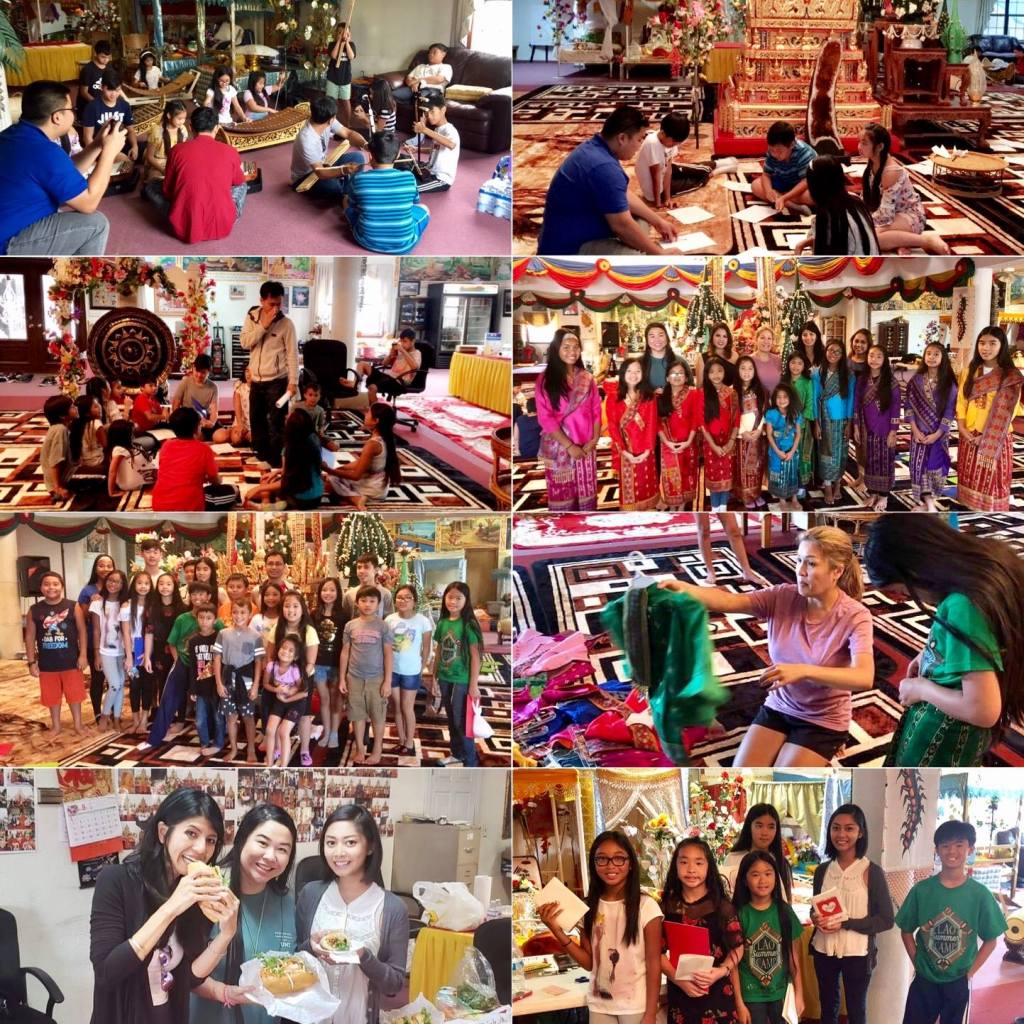
When I worked with students at the first DFW Lao Heritage camp in 2018, it was hard not to feel pain for what I never had growing up juxtaposed with immense joy for the Lao students who had the opportunity to connect with their heritage. For this summer camp, I developed a storytelling workshop in order to help the students better understand where they came from and what their parents and grandparents had endured, as Lao families often share multigenerational homes. Their preliminary activity was to interview the elders in their households prior to the workshop. Then, they created an eight-frame storyboard depicting what they’d gathered with collage materials or illustrations in a comic book style during the workshop itself.
DFW Lao Heritage Camp, 2018!
At DFW Lao Heritage, we’re working on developing grant funds and a program to similarly help Lao youth know that they can achieve academically and apply for and attend college. I am honored to have been part of DFW Lao Heritage since its beginnings in 2018.
More recently, I’ve become involved with LANA, and they have helped me better understand what Lao Americans currently face. In the U.S., approximately 27% of Lao Americans live with educational and financial disadvantages. Of the 265,000 Lao Americans here, only 14% have earned a bachelor’s degree. Many Lao Americans arrived in the U.S. as refugees from the Vietnam War and the Secret War, and parents and siblings survived but higher education was lower on the list of priorities. Personally, I would serve as the first person and woman in my family to earn a PhD. For my community, I would be an example and a resource to those who also might consider higher education as out of reach. I hope that in the near future more people will know about Laos as it stands alone, not only in relation to other Southeast Asian countries. I want to see efforts to have Laos cleared of the 80 million cluster munitions remaining from the wars increase and grow strength, though organizations like Legacies of War and Mines Advisory Group are working as hard as they can to do so.
With my work and writing, I intend to help heal through story.
It wasn’t until 2015 that I serendipitously came across a memoir by a Hmong author, Kao Kalia Yang, titled The Latehomecomer. Her family had been through the same refugee and processing camps as mine in Thailand, just a couple of years apart in the late ‘80s. Finding and reading that memoir profoundly and irrevocably changed my life.
It is significant that I use the word “serendipitously.” One can find memoirs from authors from other ethnicities on the shelves; it is rare that you will find a memoir from a Lao author if you’re not in the Southeast Asian studies section (and even if you are). I plan to change that.
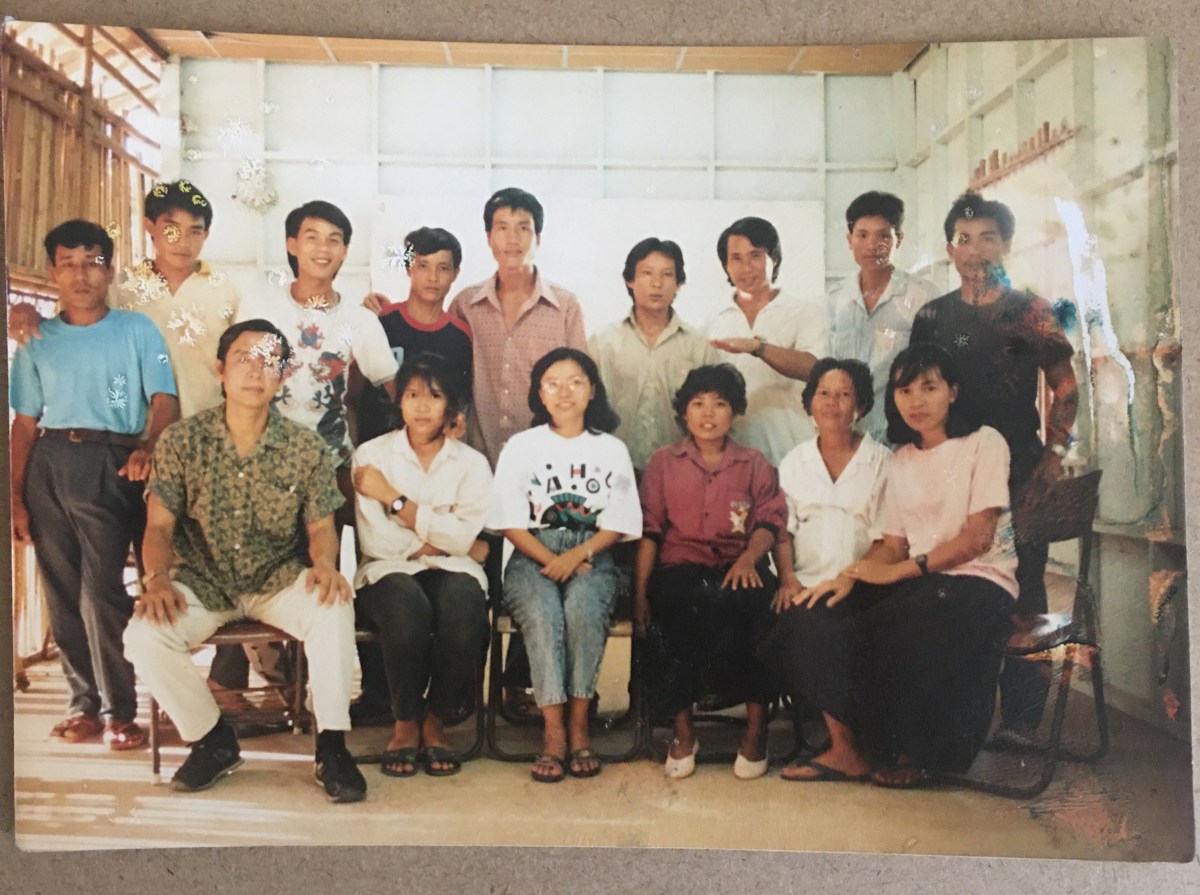
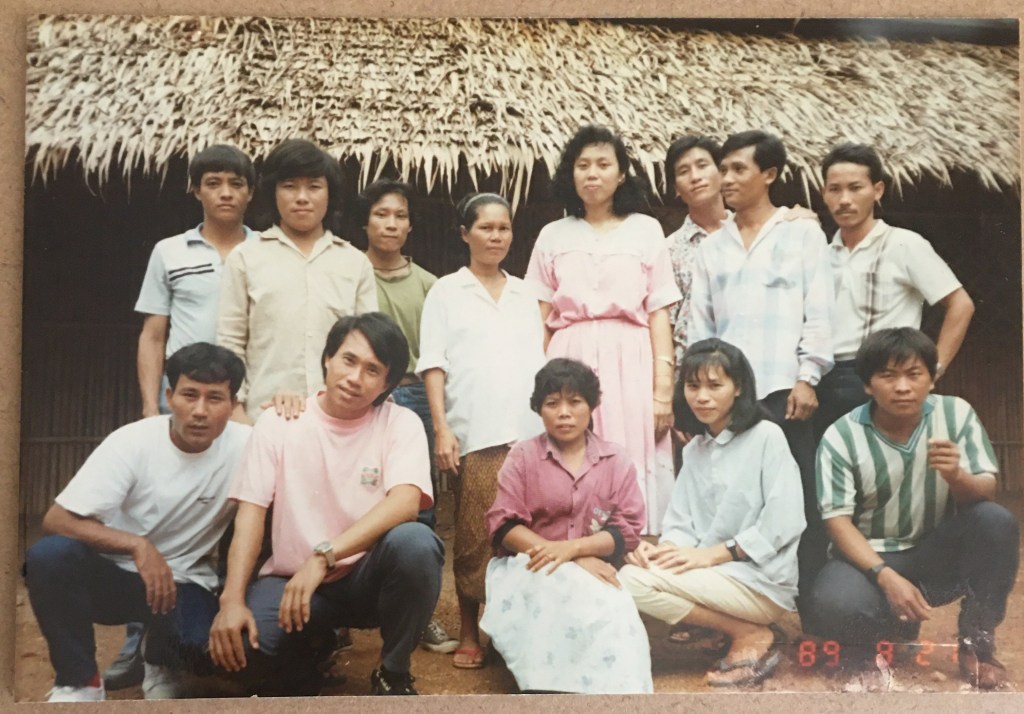
Mom, fourth from the left in the back row, in a refugee camp in Thailand. She is pregnant with my brother, Vinat, in this photo.




![year in [grief] review & forgiveness](https://notcertainbutprettysure.com/wp-content/uploads/2022/01/blakelasameewedding-104.jpg?w=1200)





 Musings